SANCTIONS BACKLASH: Gideon Sa'ar Announces Sweeping Response to Britain
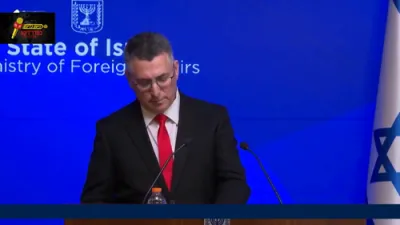
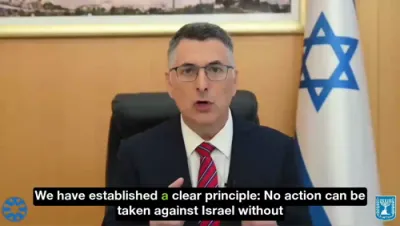
Israeli Foreign Minister Gideon Sa’ar has announced a series of firm countermeasures against Britain following the UK’s decision to impose sanctions on goods from West Bank settlements. Speaking on September 8, 2026, Sa’ar said he and Prime Minister Benjamin Netanyahu had agreed on the steps in response to what he called a hostile and one-sided policy by the British Labour government. The measures include shutting down the British consulate in Jerusalem, expelling British representatives from the International Gaza Support Center in Kiryat Gat, ending British training of Palestinian Authority forces, and barring 12 British elected officials from entering Israel.
Sa’ar described the British sanctions as a blatant and unacceptable attempt by a foreign government to interfere during an Israeli election period. He argued that Israel did not return to its homeland after 2,000 years only to lose it to Islamist jihadists. The foreign minister rejected the idea that the conflict could be resolved by declarations from London and Paris. He said the one-sided approach against Israel only pushes a solution further away and that the latest British decision joins a series of unilateral steps taken since the Labour government came to power.
In his statement Sa’ar invoked the Balfour Declaration, noting that a previous British government had formally recognized the Jewish people’s right to establish a national home in the Land of Israel, including Judea and Samaria. He warned that the new sanctions and related policies would also directly harm Palestinians who work in or depend on economic activity connected to the settlements. Sa’ar labeled the Labour government’s accusations against Israel outrageous and false and called the overall stance morally distorted.
The concrete steps are significant. Closing the British consulate in Jerusalem ends a long-standing diplomatic presence focused on Palestinian affairs. Removing British personnel from the Kiryat Gat coordination center limits their role in Gaza-related international efforts. Halting the British support team’s training activities in Ramallah ends a security cooperation program with the Palestinian Authority. The entry ban targets specific elected officials and others whom Israel accuses of antisemitic or anti-Israel activity and of denying the country’s right to exist.
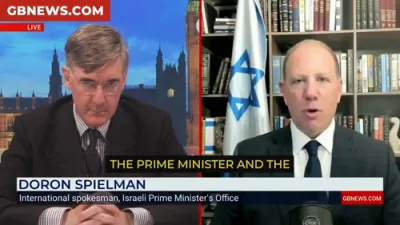
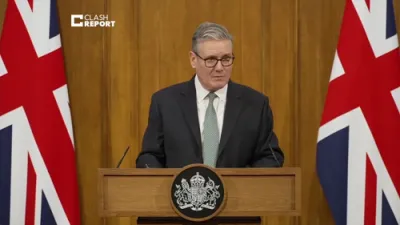
Sa’ar framed the package as a necessary response to protect Israeli sovereignty and deter further hostile measures. He indicated that similar actions could be taken against other governments that adopt comparable policies. The announcement marks a sharp deterioration in already strained relations between Israel and the United Kingdom. British officials have defended the sanctions as a response to settlement expansion and settler violence, while Israeli leaders see them as political interference and an attack on national legitimacy.
The exchange leaves bilateral ties at one of their lowest points in recent years. Israel’s decision to close a consulate and expel personnel signals that it is prepared to absorb diplomatic costs in order to push back against what it views as unfair pressure. Whether the measures produce any change in British policy or simply lock in mutual hostility will become clearer in the weeks ahead as both sides assess the practical consequences.