אמעריקאנע מיליטערישע פליגרעס ווערן געזעהן לאנדען אין פארטיגאל צוליב די איראנע שפאנונגען.
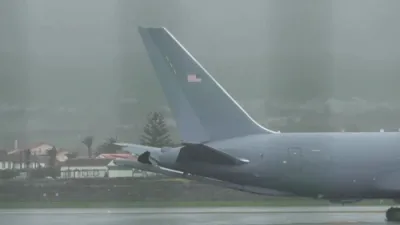
U.S. military aircraft have been observed on the tarmac at Lajes Air Base in Portugal’s Azores, highlighting a strategic transatlantic staging effort as Washington increases pressure on Iran over its advancing nuclear program and continued proxy activity. The presence of airlift and refueling platforms, including C-130 transport aircraft and KC-135 tankers, underscores the logistical backbone required for sustained operations spanning Europe, the Middle East, and the broader Indo-Pacific.
Lajes Air Base has long served as a critical mid-Atlantic hub for force projection, enabling rapid movement of personnel, equipment, and fuel between the continental United States and forward operating locations. Its renewed activity comes as the Pentagon positions a wider array of assets closer to the theater, including strike-capable aircraft, unmanned systems, and rotary-wing support elements. These deployments are designed to enhance operational flexibility, shorten response timelines, and ensure redundancy across supply and refueling corridors.
The buildup coincides with heightened concern over Iran’s reported uranium enrichment levels approaching weapons-grade thresholds and a pattern of proxy attacks targeting maritime routes and regional partners. U.S. officials have framed the current posture as a deterrent measure intended to signal readiness while diplomatic channels remain open. The forward placement of refueling aircraft is particularly significant, as it extends the range and loiter time of tactical fighters and surveillance platforms, enabling sustained presence without reliance on a single regional base.
President Donald Trump has indicated that a limited strike option remains under consideration should negotiations fail, while emphasizing that broader military action would depend on Iran’s response and regional escalation dynamics. This dual-track approach mirrors earlier strategic doctrine that combines economic pressure, diplomatic engagement, and visible military preparedness to influence adversarial decision-making.
Satellite imagery from early February has shown a wider distribution of U.S. air assets across multiple locations, suggesting a networked deployment model rather than a single concentration of force. Such dispersion reduces vulnerability, complicates adversary targeting calculations, and supports multi-axis operational planning. The inclusion of intelligence, surveillance, and reconnaissance platforms further enhances early warning capabilities and target validation processes.
The use of Lajes as a staging node also reflects the importance of transatlantic infrastructure in contemporary contingency planning. By maintaining a steady flow of logistics through established European facilities, the United States can sustain high operational tempo while minimizing strain on Middle Eastern basing arrangements.
As negotiations with Iran approach a critical juncture, the visible movement of aircraft and support systems serves both practical and signaling functions. It demonstrates the capacity to transition from deterrence to action if required, while reinforcing commitments to regional security partners and the protection of international shipping lanes. Whether the current posture leads to a diplomatic resolution or further escalation will depend on developments in the coming weeks, but the operational groundwork for multiple contingencies is clearly being established.