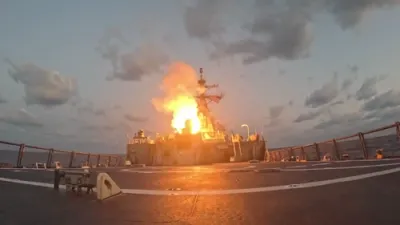
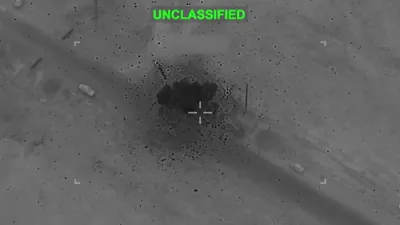
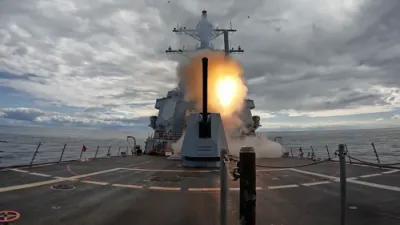
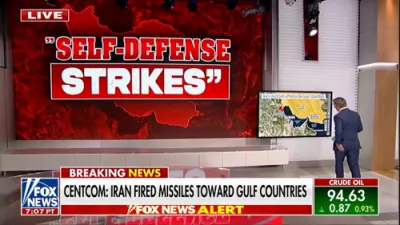
איראנער מיסיל פאסיליטיס זענען באטראפן געווארן פון אטאקעס, טראץ די באריכטן איבער בלויז אויבנאויפיגע שאדנס.
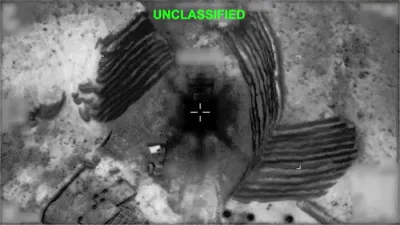
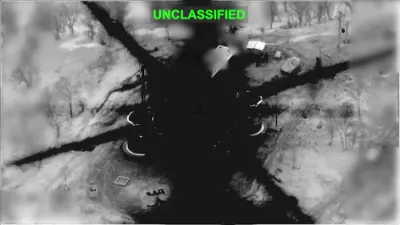
Recent assessments of strikes on Iranian missile infrastructure indicate that while surface-level damage has been inflicted, the core underground systems—often referred to as “missile cities”—remain largely intact. These facilities, operated by the Islamic Revolutionary Guard Corps, are specifically engineered to withstand conventional airstrikes. Entrances, launch points, and above-ground logistics hubs appear to have been targeted, but the deeply buried storage and transport networks continue to pose a strategic challenge. This layered defense structure highlights Iran’s long-term investment in survivable missile capabilities.
One prominent example is the Dezful Missile Base, where satellite imagery suggests that while access points and surface installations sustained damage, the underlying tunnel complex remains operational. These subterranean systems are designed for rapid repair and reactivation, allowing missile units to resume functionality within a relatively short timeframe. As a result, the immediate tactical impact of such strikes may be limited without sustained follow-up operations targeting structural vulnerabilities.
Independent analyses, including reporting from The Washington Post, indicate that approximately one-third of Iran’s estimated 470 missile launchers have been destroyed, with another third degraded. However, the remaining infrastructure—especially those embedded in hardened underground networks—retains significant operational capacity. This resilience complicates efforts to fully neutralize Iran’s missile threat through conventional strike packages alone.
Military experts emphasize that effectively dismantling these hardened facilities would likely require specialized munitions such as the GBU-57 Massive Ordnance Penetrator, designed to penetrate deep underground before detonation. Without such capabilities, strikes are more likely to achieve partial disruption rather than complete destruction. This limitation underscores the evolving nature of modern warfare, where deeply buried assets can offset traditional air superiority advantages.
Overall, the situation illustrates the strategic durability of Iran’s missile program and the complexities involved in degrading it. While recent strikes demonstrate the ability to inflict visible damage, the persistence of underground systems suggests that further, more specialized efforts would be required to achieve decisive results. The ongoing challenge lies not only in targeting these facilities but in overcoming the engineering designed specifically to keep them operational under sustained attack.