דזשעי די ווענס דרינגט צו ענדיגן די פיליבאסטער צו אפשטעלן דעמאקראטן.
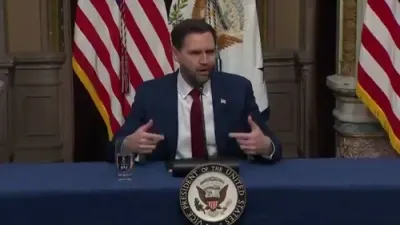
JD Vance has issued a forceful warning about the future of the U.S. Senate, arguing that Republicans must act immediately to eliminate the filibuster in order to pass key legislation and prevent what he describes as impending Democratic overreach. In a widely circulated statement, Vance claimed he would “bet every dollar” that Democrats would abolish the filibuster themselves once back in power, using that opportunity to advance sweeping structural changes. His remarks reflect growing urgency among conservatives over the long-term balance of institutional power in Washington.
Central to Vance’s argument is the push for the SAVE America Act, which would require proof of citizenship for participation in federal elections. Supporters argue that the legislation is necessary to safeguard election integrity and restore public confidence in the system. The bill builds on debates that intensified following the 2024 election cycle, where concerns over voting procedures and eligibility standards became a major political flashpoint.
Critics, however, point to existing data suggesting that instances of non-citizen voting remain extremely rare. Studies, including past federal reviews, have identified only a limited number of confirmed cases over several years, raising questions about the scale of the issue. Despite this, proponents maintain that even minimal vulnerabilities justify preemptive legislative action, particularly given the high stakes of national elections.
Vance also framed the debate in terms of future Democratic priorities, warning that eliminating the filibuster could pave the way for measures such as expanding the Supreme Court and advancing progressive policy agendas. Some voices on the left have openly supported filibuster reform as a means to pass legislation on voting rights, climate change, and other priorities. This dynamic has intensified partisan divisions over whether the filibuster serves as a necessary safeguard or an obstacle to governance.
The broader debate highlights a strategic dilemma facing both parties: whether to preserve longstanding Senate rules or modify them to achieve immediate policy goals. Vance’s call to act “now” underscores a belief that inaction could carry long-term consequences for Republican priorities and the structure of federal power. As discussions continue, the fate of the filibuster remains one of the most consequential institutional questions in American politics today.